
The Best Personal Statement Introductions Aren’t What You Think
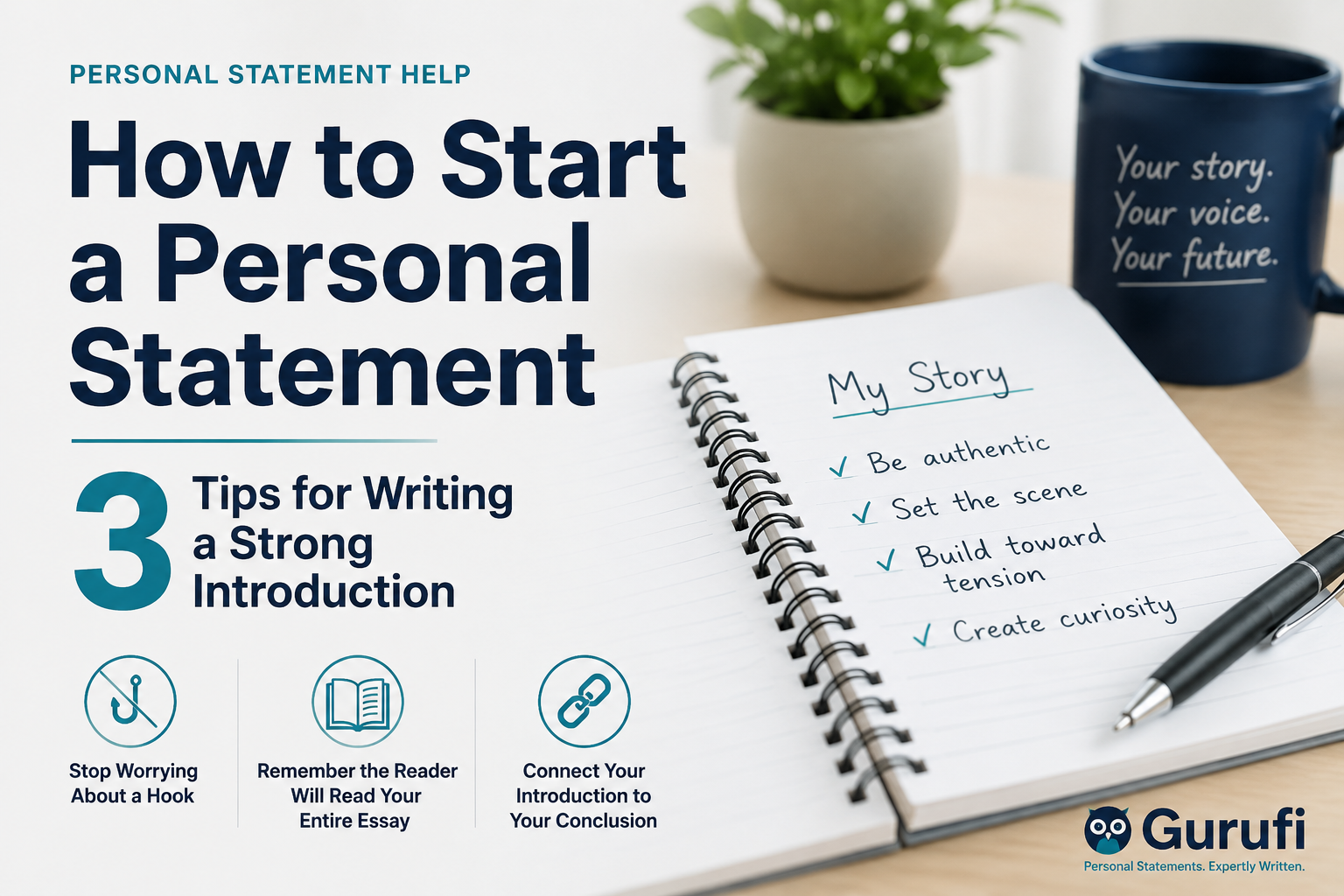
Writing openings is hard. It can feel like there’s an outsized importance because if you stumble at the start, your essay is doomed. Right? Well, not quite. Here are three important things to remember if you want your introduction to be effective.
Stop Worrying About a Hook
Your middle-school “Grammar & Composition” teacher probably told you that you needed a big, splashy hook to make the reader care. The problem with hooks is that they almost always feel artificial, overdramatic, or strangely disconnected from the rest of the piece. They’re gimmicks, and they often require you to reset your essay in the second paragraph to establish the actual tone and theme that you want your text to have.
The good news is that strong introductions are often much simpler than applicants think. In most cases, there are only a few core principles you really need to remember when opening a personal statement. Admissions officers are experienced readers. They have read thousands of essays. They can usually tell within a paragraph whether a piece of writing feels authentic or manufactured. When applicants focus too heavily on creating a dramatic opening, they often end up writing something that sounds unnatural. So tell the story naturally, honestly, and don’t be afraid to build toward tension.
The best openings rely on short sentences and simple words. A gimmicky opener uses a shocking statement, a dramatic quote, or some cinematic scene designed to grab attention immediately. The problem is that admissions essays are not middle school book reports. Remember, big hooks are difficult to sustain. An essay might begin with intense drama or exaggerated emotion, but then immediately collapse into a more ordinary explanation of grades, activities, or career goals. The tone shift becomes obvious, and the introduction starts to feel disconnected from the rest of the essay.
Instead of trying to “blow your reader away,” focus on being interesting, reflective, and genuine. A calm, thoughtful opening is usually far more effective than a flashy one. Good introductions create curiosity naturally. They invite the reader into the essay rather than trying to overwhelm them.
Remember That the Reader Is Actually Going to Read Your Entire Essay
This sounds obvious, but many applicants write as if the admissions officer will stop reading unless every question is answered immediately in the opening sentence. Similarly, the fear that the reader will get bored leads people to write over-the-top “hooks.”
In fact, openings that are boring (too rote and directly answer the question right away) or overly dramatic often flow from the same issue: not recognizing that the opening three sentences don’t have to do all the work.
For example, applicants sometimes feel pressured to begin with something like: “I want to become a physician because…” or “My passion for law began when…” or “I want to attend Columbia University because…” These introductions are robotic and formulaic. Personal statements are narratives and arguments. You are allowed to build toward your point.
If the prompt asks a specific question, you do not need to answer it in the very first sentence. In fact, I often have clientsuse their first paragraph to set the scene or establish the stakes, and then directly answer the question in the second paragraph. You are allowed to set the stage. You are allowed to establish context, introduce a story, or frame the themes that will shape the rest of the essay.
Of course, this does not mean you should avoid answering the prompt entirely until the final paragraph. There is a balance. Readers should understand where the essay is going reasonably early on. But strong writing often unfolds gradually. The introduction should create momentum, not simply dump the thesis statement onto the page immediately. Think of your opening as an invitation into the larger conversation your essay is having.
Connect Your Introduction to Your Conclusion
Many applicants treat the conclusion as an afterthought. They summarize a few points, restate their goals, and end the essay abruptly. This is a missed opportunity.
Strong conclusions create a sense of closure by returning to the ideas, stories, or emotional themes introduced earlier in the essay. When done well, this gives the personal statement a feeling of cohesion and intentionality.
If your introduction opens with a patient interaction, a family memory, a research experience, or a personal challenge, your conclusion can revisit that moment from a new perspective. Ideally, the reader should feel that the essay has come full circle. It’s a conclusion, and not just an abrupt ending.
This does not require anything overly dramatic or poetic. In fact, subtlety is usually better. The goal is simply to create the sense that the essay was thoughtfully constructed from beginning to end. Remembering that you’re going to use some elements from your introduction in the conclusion will also help you select the themes and stories for your introduction, and they’ll set the framework for your overall essay.
Remember, a good personal statement introduction is not about tricks, gimmicks, or theatrical writing. Unless you’re applying for a humanities or arts graduate program, the point isn’t the writing per se. It’s about telling your story with clarity, authenticity, and thoughtfulness. You want to establish trust with the reader.








Leave a Reply
You must be logged in to post a comment.